
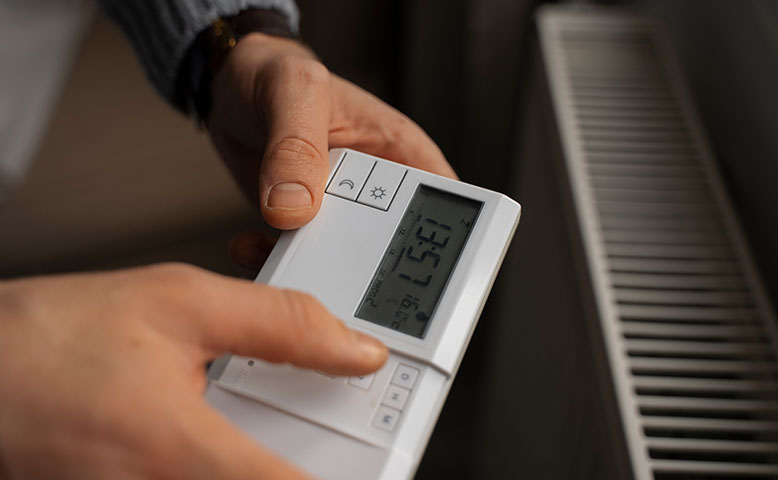
Have you ever been shivering on a cold morning or sweating on a hot afternoon, only to realize that your thermostat isn’t responding as it should? Thermostat malfunctions can lead to uncomfortable temperatures at home, unexpected energy bills, and the frustration of not knowing what’s wrong or how to fix it. But don’t worry—simple checks and adjustments can resolve many thermostat issues.
Often, a simple battery replacement or relocating the thermostat to a more central location away from direct sunlight can quickly bring it back to a working state—and your comfort to normal.
To elaborate more and help you troubleshoot this headache, here are five common problems with quick fixes that might restore your home’s comfort and peace of mind.
1. Dead Batteries
Dead batteries are one of the most common and easily overlooked causes of thermostat malfunction. Changing the batteries in your thermostat could be the only solution if the screen is blank or won’t respond.
Quick Fix: An easy way to fix this is to take the cover off the thermostat and put fresh batteries in. Typical thermostat batteries are AA or AAA. However, certain models may call for different kinds. Once done, wait a few minutes for the thermostat to reset and try adjusting your settings.
2. Dirt and Debris
The accumulation of dust and debris within your thermostat can diminish its sensitivity and accuracy over time. Ultimately, this can cause your HVAC system to overwork itself or fail to activate at the appropriate times.
Quick Fix: Take the lid off your thermostat (see the manual if needed) and scrub the inside with a soft bristle brush or compressed air. Pay special attention to the bimetallic coil and contact points.
3. Improper Installation or Calibration
If your thermostat was installed where it can’t correctly gauge the home’s overall temperature—near windows, doors, or heat sources—it might misread the actual room temperature. Additionally, a thermostat that hasn’t been calibrated correctly may lead to inaccurate temperature settings.
Quick Fix: Think about moving the thermostat to the middle of the room, out of the way of any drafts or strong sunlight. Calibration is a bit more technical and may require a professional’s help, but checking the manual for recalibration instructions can be a start.
4. Tripped Circuit Breaker or Blown Fuse
Problems with your HVAC system’s power supply can masquerade as thermostat malfunctions. A tripped circuit breaker or a blown fuse can cut power to the system, preventing the thermostat from functioning.
Quick Fix: See if any breakers or fuses in your home’s electrical panel have blown. If yes, replace them and reset the breaker. If the problem recurs, it may indicate a more significant electrical issue, requiring professional attention.
5. Old or Faulty Wiring
Wiring faults can disrupt the link between your thermostat and the HVAC system. Wires can get frayed, loose, or disconnected with time, which can cause partial or total functionality loss.
Quick Fix: Inspect the wiring connections behind the thermostat cover for any apparent signs of damage or disconnection. Tighten the loose connections or replace damaged wires if you have basic electrical knowledge. You should contact an expert to prevent electrical shock or additional system damage if you are doubtful.
Conclusion
While these fixes can solve some of the most common thermostat problems, they’re not a cure-all for every issue. It may be necessary to call a professional HVAC specialist if you have attempted these fixes, but your thermostat is still malfunctioning.
There are occasions when the thermostat isn’t to blame, but rather the HVAC system as a whole. Regular maintenance checks can also prevent many of these issues from arising in the first place, ensuring that your home remains comfortable all year round.
Remember that a well-functioning thermostat keeps your home at the ideal temperature and helps conserve energy and reduce utility bills.


